

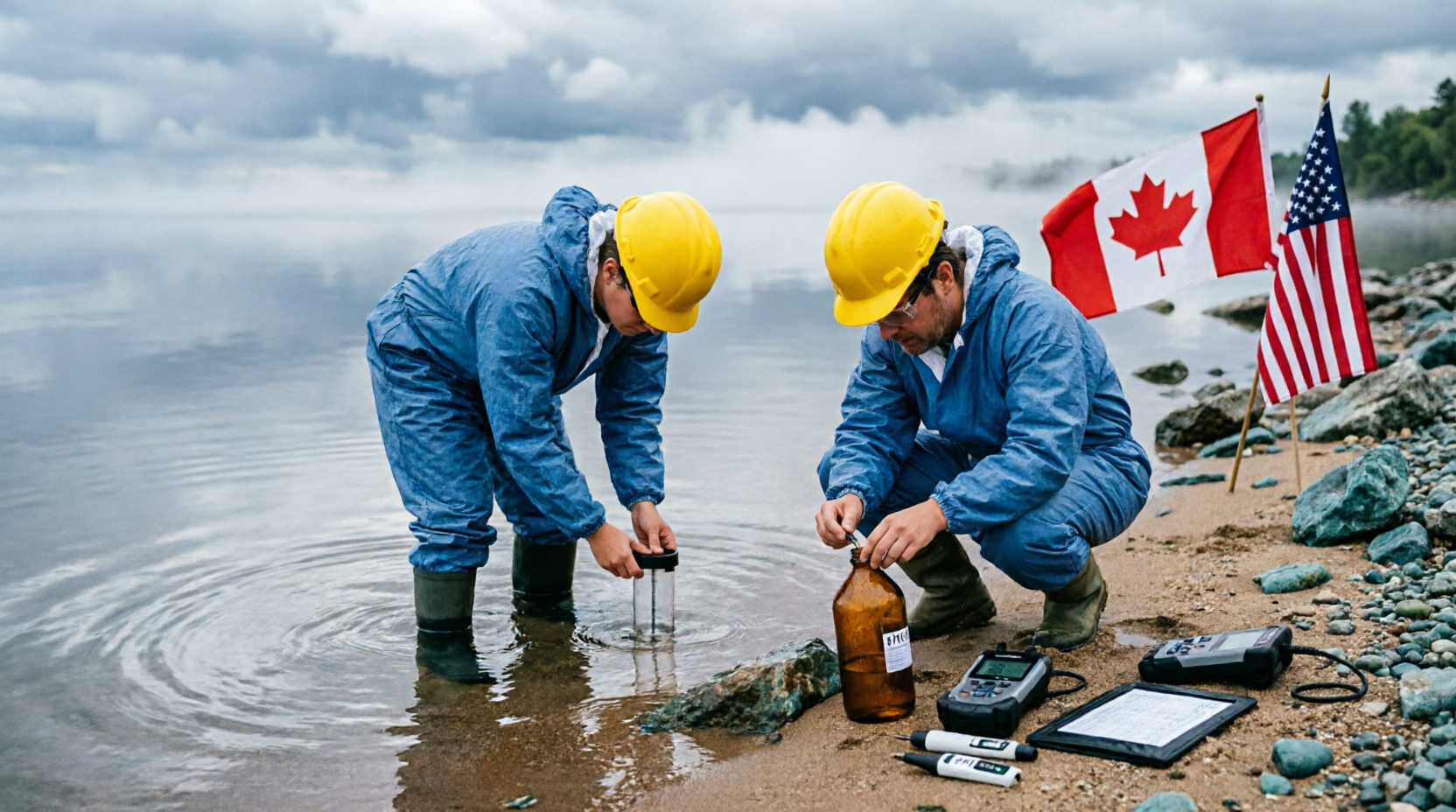
A defining feature of this renewed agreement is the formal elevation of Indigenous leadership in water stewardship. For the first time, the Anishinaabe and Haudenosaunee nations, whose traditional territories encompass the Great Lakes basin, have been granted a permanent, voting seat on the binational oversight committee. This ensures that Indigenous ecological knowledge and the principle of water as a sacred, living entity are central to all regulatory decisions, moving beyond mere consultation to active co-management.
Advertisement
To enforce these new standards, the agreement funds the deployment of a next-generation network of autonomous, solar-powered monitoring buoys across the lakes. These buoys will provide real-time, open-source data on water temperature, dissolved oxygen, pH levels, and chemical concentrations. This transparency is designed to hold both governments and industrial polluters accountable, allowing independent scientists and the public to track progress in real time.
The path to implementation will be fraught with political and economic friction. Harmonizing environmental regulations between two sovereign nations with different domestic political pressures is a monumental task. Industrial groups are already preparing legal challenges, arguing that the new compliance costs will make North American manufacturing less competitive globally.
Nevertheless, the stakes could not be higher. The Great Lakes are not just a resource; they are a shared ecological heritage that supports a regional economy worth trillions of dollars. The 2026 agreement represents a critical acknowledgment that incremental progress is no longer sufficient. By taking a hardline stance on emerging contaminants and agricultural runoff, Canada and the US are attempting to secure the ecological integrity of the Great Lakes for generations to come, proving that binational cooperation is essential for planetary survival.