

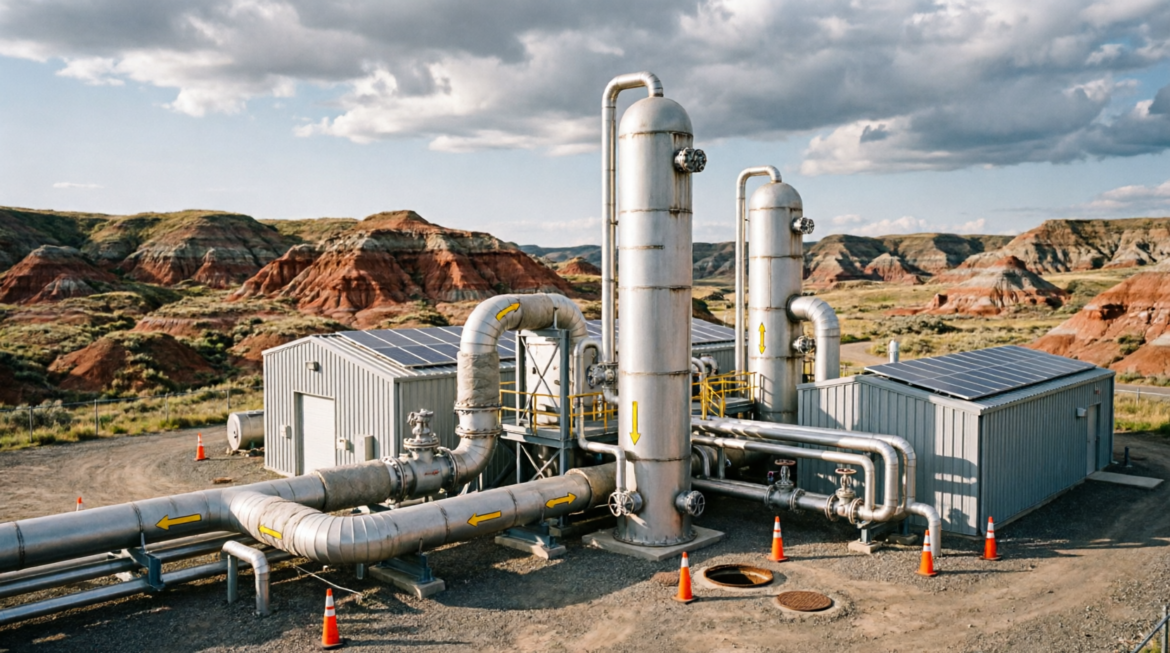
As Canada strives to meet its ambitious legislated target of net-zero greenhouse gas emissions by 2050, the province of Alberta has positioned itself at the center of a highly contentious national debate. The province is championing Carbon Capture, Utilization, and Storage (CCUS) as the cornerstone of its climate strategy, arguing that it is the only viable pathway to decarbonize its massive oil and gas sector while preserving hundreds of thousands of jobs. However, environmental advocates and independent economists are raising loud alarms, questioning whether these multi-billion-dollar projects represent genuine climate action or merely sophisticated greenwashing designed to prolong the fossil fuel era.
The premise of CCUS is technologically compelling. It involves capturing carbon dioxide emissions at the source, such as an oil sands facility or a natural gas power plant, compressing the gas, and transporting it via pipeline to be injected deep underground into depleted geological formations, where it is permanently stored. Alberta, with its extensive geological expertise and existing pipeline infrastructure, is uniquely positioned to scale this technology. The proposed Pathways Alliance, a coalition of Canada’s largest oil sands producers, has outlined a massive, multi-decade investment plan to achieve net-zero operations by 2050, heavily reliant on a vast, shared CCUS network.
Proponents argue that CCUS is an economic boon. They contend that abruptly shutting down the oil and gas sector, which contributes significantly to Canada’s GDP and export revenue, would be economically catastrophic, particularly for Western Canada. CCUS, they argue, allows the province to maintain its economic engine while drastically reducing its carbon footprint. Furthermore, they point out that the technology is essential for decarbonizing “hard-to-abate” sectors like cement and steel manufacturing, where electrification is not currently feasible. The federal government has supported this view by introducing a lucrative Investment Tax Credit for CCUS projects, aiming to attract private capital and position Canada as a global leader in clean tech.
However, critics view this narrative with deep skepticism. Environmental organizations, such as the Pembina Institute and Environmental Defence, argue that the oil and gas industry is using CCUS as a shield to secure social license and government subsidies while continuing to expand overall fossil fuel production. They point to the historical track record of CCUS, noting that many high-profile projects globally have failed to meet their capture targets, suffered from massive cost overruns, or been quietly abandoned.