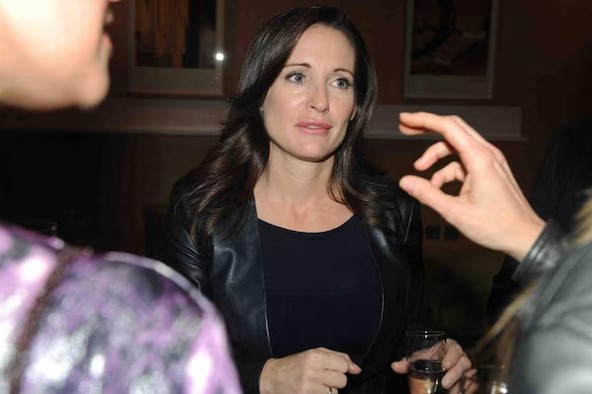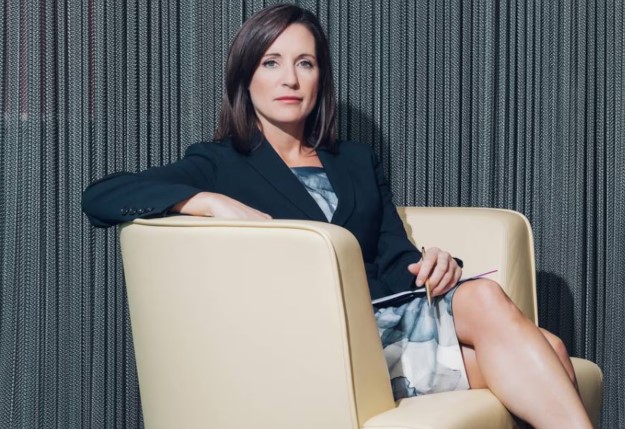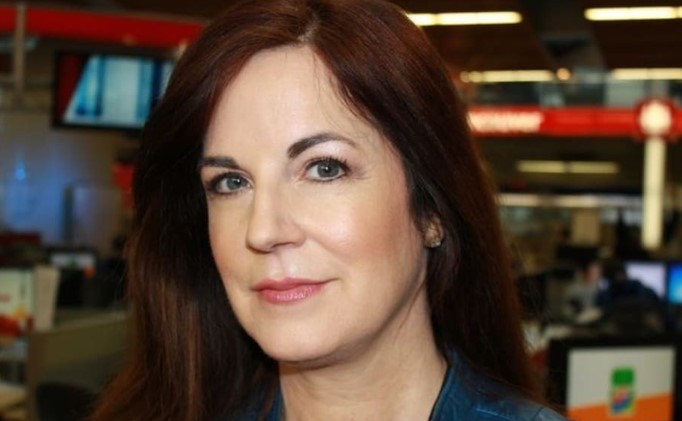

Kat Palmer twirls her hair around her finger and looks up at the ceiling. She is stumbling over a question that, for most, would be a breeze to answer.
Sitting in her small Vancouver apartment, I asked Kat to tell me a little bit about her siblings.
Up until a few years ago she would have simply said: “I’m an only child.” Her response now is mindboggling:
“So, my oldest brother that I know about is a lawyer.
And then James is a welder.
Rebecca works for Parliament.
One of my sisters has a good old government job in Ottawa.
Who else am I forgetting? One of my siblings makes documentaries.
Uh. There’s so many.”
The girl who grew up thinking she was an only child has discovered she has at least 10 siblings.
They all share the same biological father: a man named Dr. Norman Barwin. The once-revered Ottawa fertility guru is accused of helping each of their mothers get pregnant in the most horrifying way: by secretly using his own sperm, at least 11 times.
Kat and her half-siblings are part of an unprecedented class-action lawsuit that has grown to include an alarming number of alleged victims since it was first announced in 2016.
Along with the 11 so-called “Barwin Babies,” there are others who have recently discovered they were conceived, not with their father’s sperm, or with donor sperm that their parents selected, but with unknown donors.
They are left grappling with the fact they may never know who their biological fathers are. And then there are the heartbreaking cases of men who stored their samples with Dr. Barwin before becoming infertile from medical treatments like chemotherapy.
Some of those men went on to have children, only to find out now that their stored sperm samples weren’t used and that they have no biological link to their children.
There is also the sobering possibility that their samples may have been used to impregnate strangers.
In total, 50 people have now come forward to claim that they are a product of Dr. Barwin’s nightmarish “mix-ups.” There’s no telling how many more there may be, but the lawyers behind the class-action lawsuit are advising every single one of Dr. Barwin’s patients, over the last four decades, to get a DNA test to be certain of their genetic makeup.
Until his fall from grace, Dr. Norman Barwin was known in fertility circles as “The Baby God” — the man who worked magic to get his patients pregnant. A married father of four, he was a pillar of the Jewish and arts community in Ottawa, a philanthropist who was awarded the Order of Canada. He was born in South Africa and trained in Ireland.
Not surprisingly, Norman Barwin refused to meet me for an interview. So I went to his modest lakefront home in Ottawa.
He was standing outside on his driveway when I approached. He repeatedly said “No comment” when I asked him the one question that haunts so many of his former patients: “Why?”
But when you watch the W5 documentary, “The Barwin Babies,” you’ll see Norm Barwin did finally did mutter a response. And it sounds alarmingly similar to how he dealt with questions that were raised years ago when another bizarre secret was exposed.
He is accused of cheating on marathons. Twice. Once in 2000 in Boston and then again the following year in Ottawa. Both times he skipped out part-way through the 42.2 km run and rejoined near the end, crossing with astoundingly good finish times.
When grilled about the cheating by CTV reporter Glen McGregor, who was working for the Ottawa Citizen at the time, Barwin said: “I’m not quite sure what happened. I have had a hard time with this. It wasn’t my intent to do this. It’s really very embarrassing for me. It was quite out of character, I promise you.”