

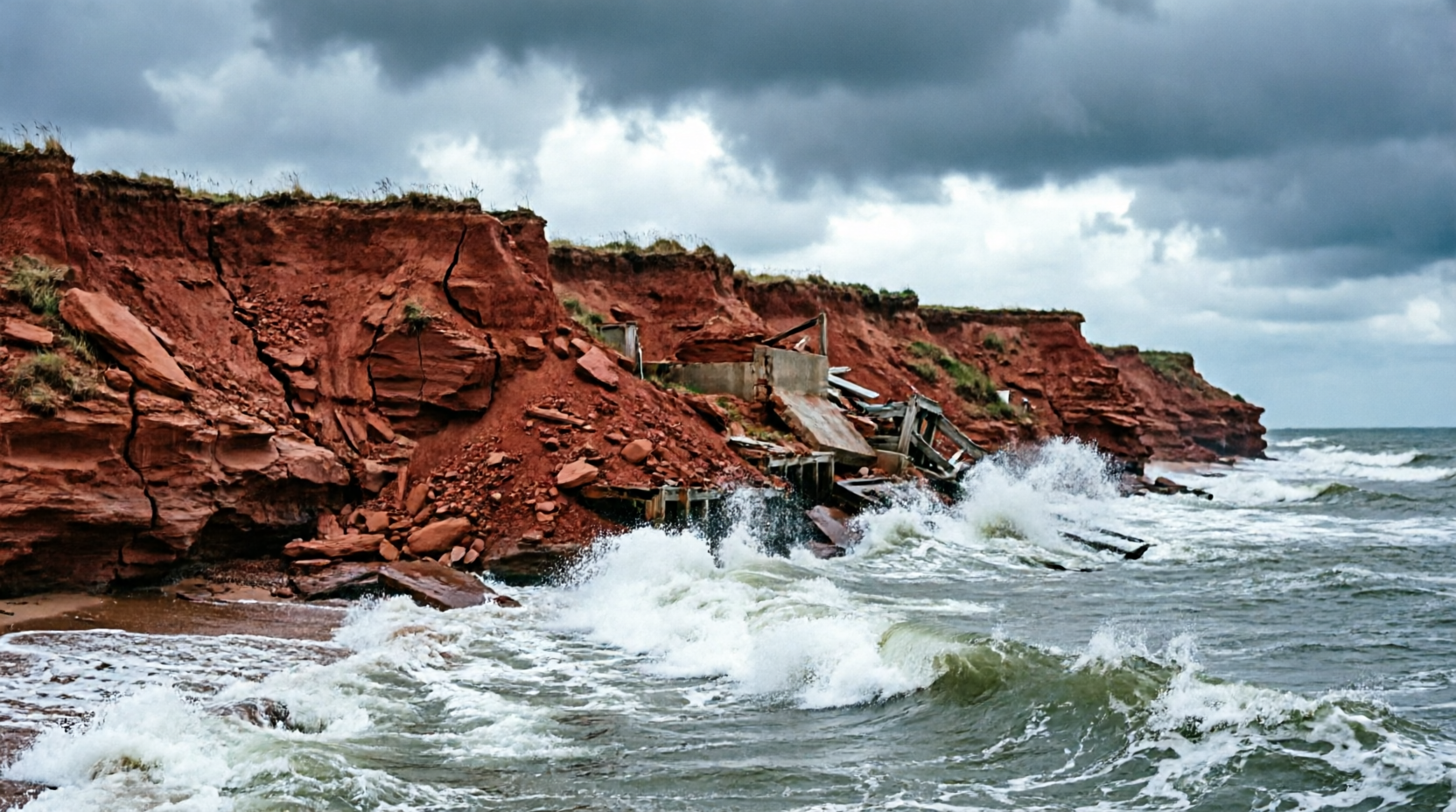
The picturesque coastlines of Atlantic Canada, long celebrated for their rugged beauty and vibrant maritime communities, are on the front lines of the global climate crisis. In provinces like Prince Edward Island, Nova Scotia, and Newfoundland and Labrador, the threat is no longer a distant, theoretical projection; it is a visible, accelerating reality. Rapid coastal erosion, driven by rising sea levels, increased storm surge frequency, and the loss of protective winter sea ice, is literally washing away the ground beneath residents’ feet, prompting a desperate demand for federal funding to support managed retreat and community relocation.
Advertisement
The physical evidence is stark and heartbreaking. In PEI, famous for its red sandstone cliffs, entire stretches of coastline have receded by several meters in just the past decade. Homes that were once safely set back from the shore now teeter on the edge of collapsing bluffs. In Nova Scotia, vital coastal infrastructure, including highways and fishing harbors, has been repeatedly damaged or destroyed by increasingly powerful nor’easters and post-tropical hurricanes. The natural buffers that once protected these shores, such as salt marshes and sea ice, are degrading faster than they can regenerate.
For decades, the standard response to coastal erosion has been “hard armoring”—building seawalls, riprap, and groynes to hold back the sea. However, coastal engineers and ecologists increasingly warn that this approach is a losing battle. Seawalls are astronomically expensive to build and maintain, and they often exacerbate erosion on adjacent, unprotected properties by altering natural sediment flow. Furthermore, hard armoring destroys the intertidal habitats that are crucial for local fisheries and biodiversity.
Consequently, the concept of “managed retreat”—the planned, coordinated relocation of communities and infrastructure away from high-risk coastal zones—has moved from the fringes of academic discussion to the center of municipal policy. However, implementing managed retreat is politically and emotionally fraught. For generations, these communities have built their identities, cultures, and livelihoods around the sea. The prospect of abandoning ancestral homes, local cemeteries, and historic buildings is met with fierce, understandable resistance.