

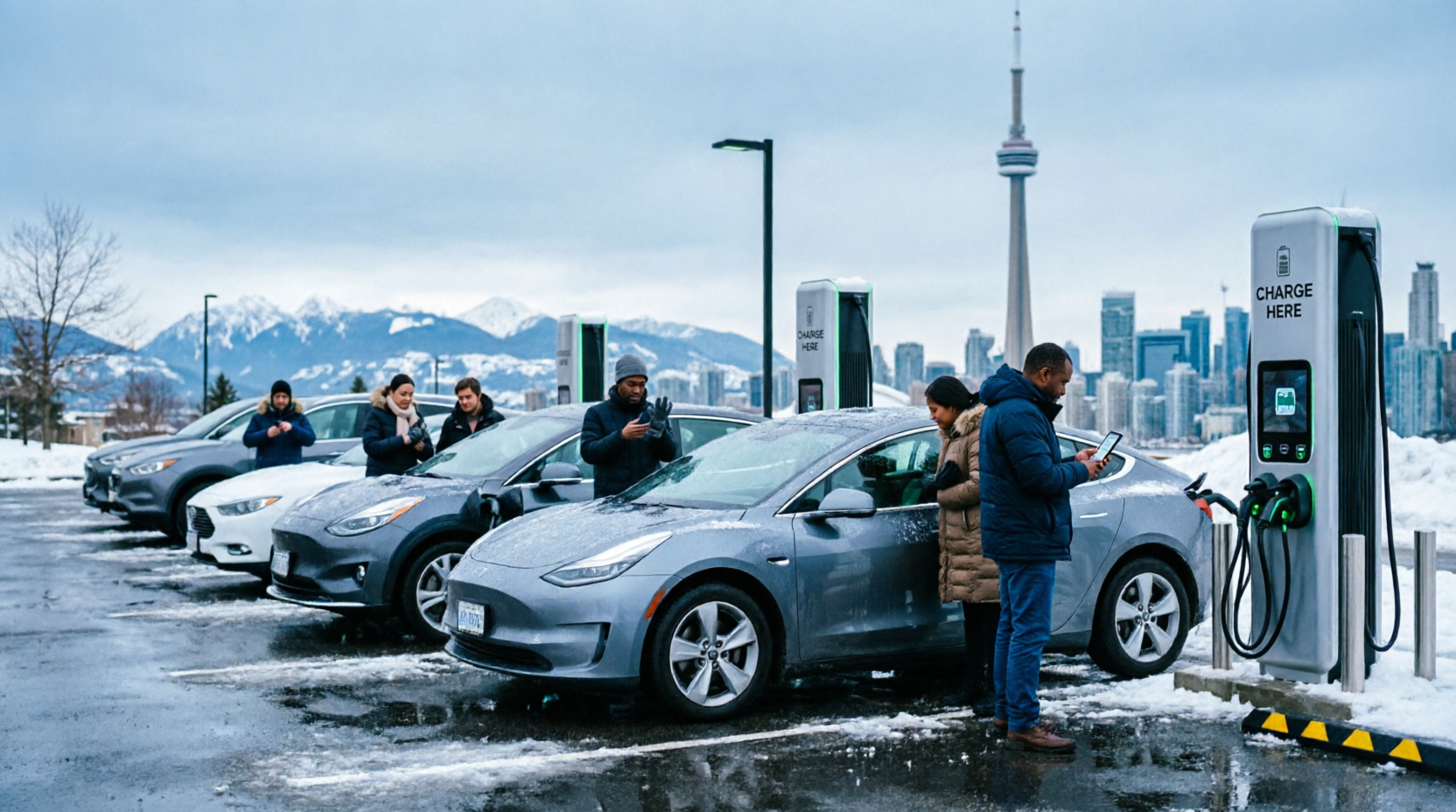
Canada has officially reached a pivotal milestone in its transition to a zero-emission transportation future. Driven by aggressive federal mandates, generous purchase incentives, and growing consumer awareness, electric vehicles (EVs) now account for nearly twenty percent of all new light-duty vehicle sales nationwide. While this statistic is a triumph for climate policy, it has abruptly shifted the national conversation from “How do we get people to buy EVs?” to a more pressing, infrastructural question: “Is Canada’s charging network actually ready to support them?”
Advertisement
The answer, experts agree, is a complex tale of two Canadas. In major urban centers like Toronto, Vancouver, and Montreal, the EV transition is visibly succeeding. Condominiums are increasingly retrofitting parking garages with Level 2 chargers, and a dense network of public fast-charging stations operated by companies like ChargePoint and FLO makes urban EV ownership highly convenient. Provincial zero-emission vehicle (ZEV) mandates in BC and Quebec have further accelerated this urban adoption, creating robust local markets and fostering a thriving ecosystem of green tech jobs.
However, as soon as drivers venture beyond the boundaries of major metropolitan areas, the cracks in the infrastructure become glaringly apparent. In rural communities, the Prairies, and Northern Canada, the charging desert is a very real barrier to adoption. Intercity travel along major corridors, such as the Trans-Canada Highway through Northern Ontario or the routes connecting Alberta’s major cities, still features significant gaps in reliable, high-speed DC fast-charging availability. For many Canadians, “range anxiety” is not a psychological quirk, but a rational response to the reality of long distances between towns and the harsh realities of the Canadian winter.