

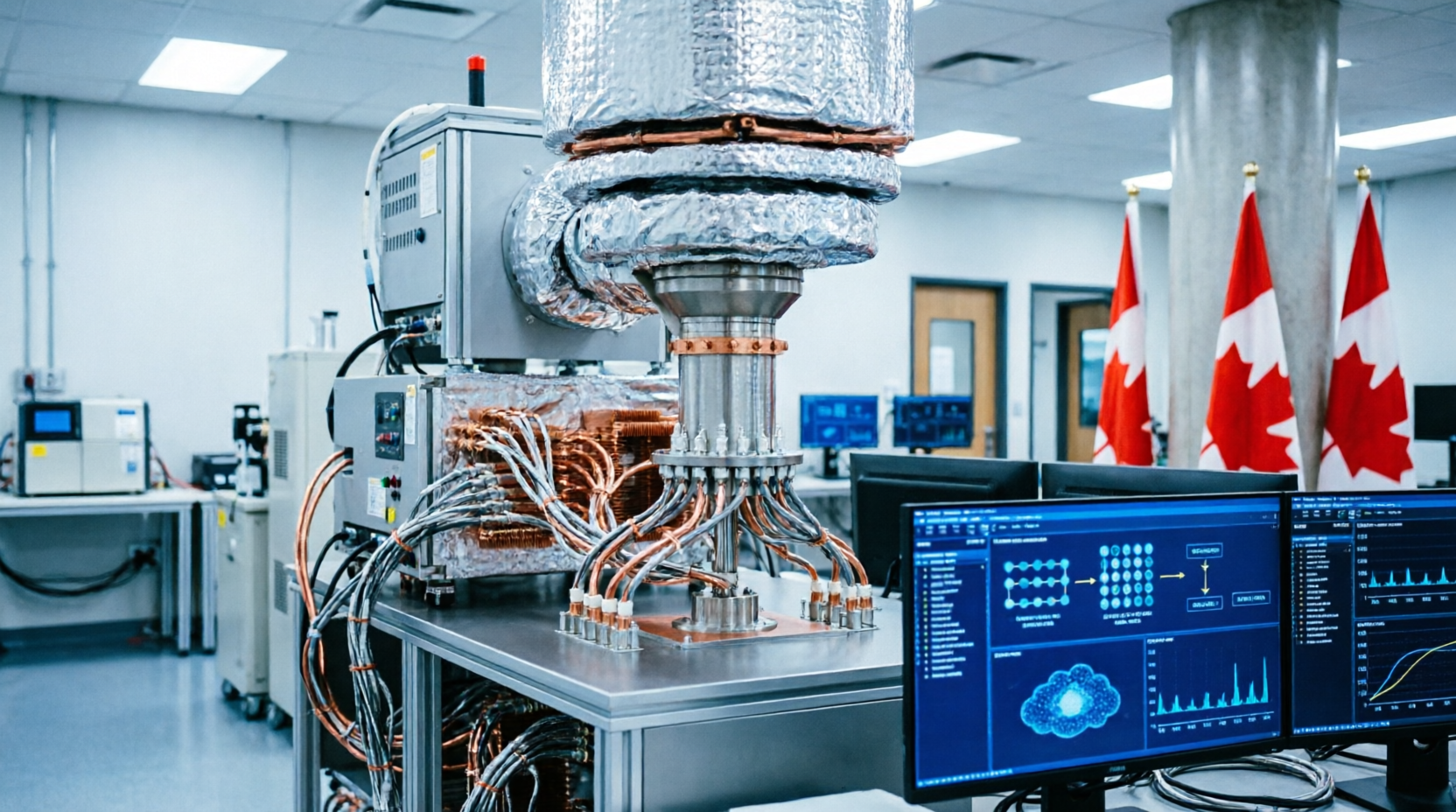
Waterloo’s success is not an isolated event but the result of a highly effective innovation ecosystem. The university’s VeloCity program and the adjacent Perimeter Institute for Theoretical Physics provide a fertile ground for translating theoretical physics into commercial ventures. Furthermore, the Canadian government’s National Quantum Strategy, which committed over three hundred million dollars to quantum research and commercialization, has provided crucial funding for infrastructure and talent development. This strategic government support has positioned Canada as a formidable player in the global quantum race, competing directly with the United States, China, and the European Union.
Advertisement
Despite the excitement, experts caution that widespread commercial quantum computing is still several years away. Scaling up the number of qubits to build a fully fault-tolerant quantum computer remains a massive engineering challenge. Furthermore, the hardware required to operate these systems, including ultra-cold dilution refrigerators, is incredibly expensive and complex to maintain. There are also significant cybersecurity implications; a sufficiently powerful quantum computer could theoretically break the encryption protocols that currently secure global digital communications, prompting a parallel race to develop quantum-resistant cryptography.
The breakthrough at the University of Waterloo marks a pivotal moment in the evolution of quantum technology. By solving critical stability and error-correction issues, the researchers have provided a clear roadmap for the next generation of quantum hardware. As commercial interest intensifies and government support remains strong, Waterloo is not just contributing to the global quantum revolution; it is actively leading it, ensuring that Canada will be at the forefront of the next great technological paradigm shift.