

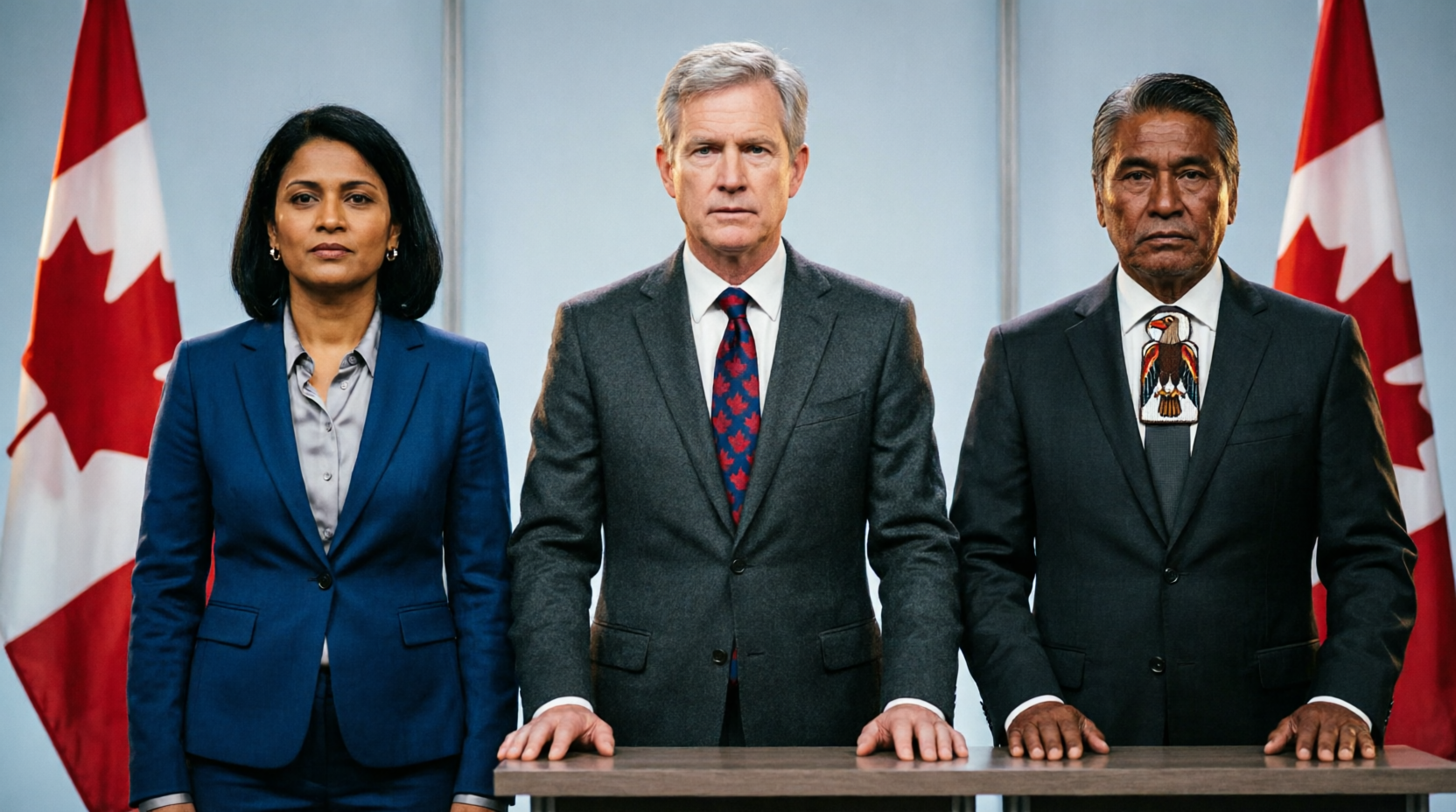
As Canada inches closer to a potential federal election, the political landscape is being significantly shaped not just by the governing Liberals and the Official Opposition Conservatives, but by the strategic maneuvers of minor parties. In a minority parliament environment, the New Democratic Party (NDP), the Bloc Québécois, and the Green Party are leveraging their pivotal positions to force major policy concessions, effectively dictating the terms of the national debate and reshaping the platforms of the larger parties.
Advertisement
The NDP, under the leadership of Jagmeet Singh, has successfully positioned itself as the primary champion of working-class affordability and social safety net expansion. By threatening to withdraw confidence and supply from the minority government, the NDP has extracted massive commitments, most notably the full national rollout of pharmacare and the expansion of the Canadian Dental Care Plan. These policy victories have forced the Liberal Party to adopt a more aggressive social-democratic tone, shifting their campaign messaging away from fiscal centrism and toward robust public service delivery. Consequently, the Liberals are now heavily promoting these programs as their own achievements, blurring the ideological lines between the two progressive parties.
In Quebec, the Bloc Québécois is utilizing its substantial caucus to advance a distinctly provincial agenda that resonates deeply with Quebec voters. Leader Yves-François Blanchet has focused his party’s efforts on securing greater provincial autonomy, increased federal transfers for healthcare without strict conditions, and targeted subsidies for the aerospace and aluminum industries. The Bloc’s influence is evident in the government’s recent industrial strategies, which have increasingly favored regional economic development. By highlighting the failures of federalism to protect Quebec’s interests, the Bloc is forcing the Liberals to adopt a more decentralized approach to federal-provincial relations, ensuring that Quebec’s unique societal model remains a central pillar of the national political discourse.